
Unclaimed

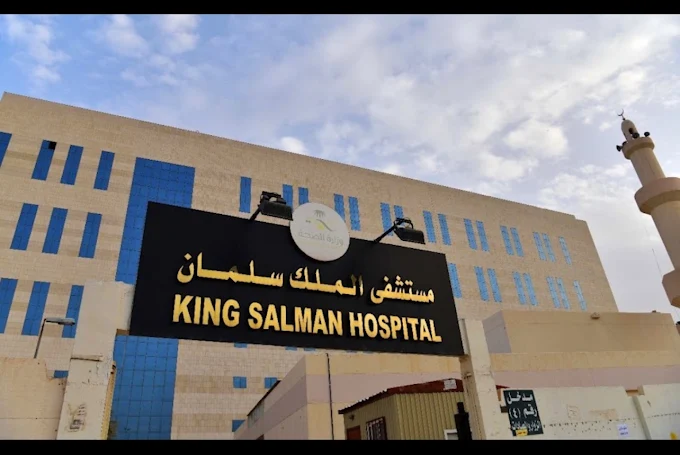
King Salman Hospital Riyadh
(0)
Aishah Bint Abi Bakr, Al Uraija Al Wusta, Riyadh 12769Overview
About
King Salman Hospital is a government hospital in the capital, Riyadh. It was built in 1984 and was inaugurated by King Salman bin Abdulaziz Al Saud when he was the prince of the Riyadh Province.
The hospital was established in 1405 AH an
Features
Amenities
- hospital
- service
- point of interest
- health
- establishment
Schedule
Opening hours
monClosed
tueClosed
wedClosed
thuClosed
friClosed
satClosed
sunClosed
3 photos
Photo gallery
Watch
Video tour
Find us
Location
Aishah Bint Abi Bakr, Al Uraija Al Wusta, Riyadh 12769
What guests say
Reviews (0)
No reviews yet — be the first to share your experience.
About this place — in detail
King Salman Hospital is a government hospital in the capital, Riyadh. It was built in 1984 and was inaugurated by King Salman bin Abdulaziz Al Saud when he was the prince of the Riyadh Province.
The hospital was established in 1405 AH and was initially affiliated with the Patients' Friends Association. It sits in the Al-Uraija district, southwest of Riyadh, on a campus of approximately 196,000 square meters.
Today, the hospital operates under the Saudi Ministry of Health. It serves as a major tertiary referral center for patients across Riyadh and the wider region.
Hospital Size and Capacity
King Salman Hospital is one of the largest government hospitals in Riyadh. Here are the key figures:
500-bed capacity (as of 2018)
Over 1,000 health practitioners on staff (as of 2018)
196,000 square meters total campus area
Receives referrals from 13 primary healthcare centers and 37 hospitals across Riyadh Province
Clearly, this is not a standard community clinic. It functions as a full medical city with inpatient wards, outpatient clinics, operating theaters, and intensive care units all under one roof.
Medical Specialties and Departments
King Salman Hospital covers a broad range of clinical specialties. Patients can access care across multiple disciplines in one visit.
Key departments include:
Internal Medicine: covers hypertension, diabetes, thyroid disorders, kidney disease, and infections
Cardiology and Cardiac Surgery: includes echocardiography, nuclear cardiology, cardiac catheterization, coronary stenting, and open-heart surgery
Emergency and Trauma Care: open 24 hours, 7 days a week
Intensive Care Units (ICU)
Obstetrics and Maternity
Pediatrics
Orthopedics and Surgery
Oncology
Neurology
Ophthalmology
Rehabilitation and Physiotherapy
Radiology and Diagnostic Imaging
Clinical Laboratory
Pharmacy
Moreover, the hospital accepts referral cases from regional hospitals and handles medical evacuation cases. This makes it a critical hub for complex and high-acuity patients across Riyadh Province.
A First in Saudi Arabia: Home Healthcare Service
King Salman Hospital is the first government medical facility to apply the home healthcare service system in Riyadh Province. This positively affected the care of patients who need attention and follow-up from the comfort of their homes.
This milestone places King Salman Hospital ahead of most comparable public hospitals in the Kingdom. Patients with chronic conditions or limited mobility benefit directly from this program.
Electronic and Digital Services
The hospital has moved strongly toward digital healthcare delivery. On average, more than 50,000 patients benefit from the hospital's electronic services each month. These services span radiology, pharmacy, and laboratory functions, including receiving requests, generating reports, dispensing medications, and entering lab results.
Furthermore, departments handling medical reports have converted to a fully electronic, paperless system. This reduces waiting times and improves record accuracy for every patient.
Accreditations and Quality Certifications
King Salman Hospital holds multiple internationally recognized quality certifications. These are not minor achievements. Each one reflects a rigorous external review of clinical processes, patient safety, and staff competency.
JCI (Joint Commission International) accreditation from the United States.
CBAHI certification from the Saudi Central Board for Accreditation of Healthcare Institutions.
BFHI (Baby-Friendly Hospital Initiative) label from the World Health Organization.
RIQAS (Randox International Quality Assessment Scheme) certificate for standard laboratory samples.
Most importantly, the JCI accreditation is widely considered the gold standard for hospital quality worldwide. Very few government hospitals in Saudi Arabia hold all four of these certifications at once.
Who Does the Hospital Serve?
King Salman Hospital serves a wide patient base. This includes:
Saudi nationals living in Riyadh and surrounding provinces
Expatriate residents covered under government or employer health plans
Patients referred from 37 hospitals and 13 primary care centers across Riyadh Province
Emergency and medical evacuation cases from the region
In addition, the hospital participates in medical education events and collaborates with leading health experts, reinforcing its role as an academic and referral institution.
Why Choose King Salman Hospital?
There are several practical reasons patients and families in Riyadh rely on this hospital:
Government-funded care with no out-of-pocket barriers for eligible patients
Internationally accredited across four major quality frameworks
First public hospital in Riyadh to offer home healthcare
Over 50,000 monthly users of its digital health services
24/7 emergency services with referral capacity
A campus large enough to handle complex, multi-department cases
You might also like
Related listings
Hail General Hospital | 24/7 Emergency & Trauma Care in Haii
Hail
Security Forces Hospital Makkah (SFHM) | Ministry of Interior Hospital
Makkah
King Saud University Medical City (KSUMC)
Riyadh
Ajyad Emergency Hospital Makkah
Makkah
East Jeddah General Hospital | Public Healthcare in Jeddah, Saudi Arabia
Jeddah
King Faisal Specialist Hospital & Research Center (KFSH&RC)
Riyadh