
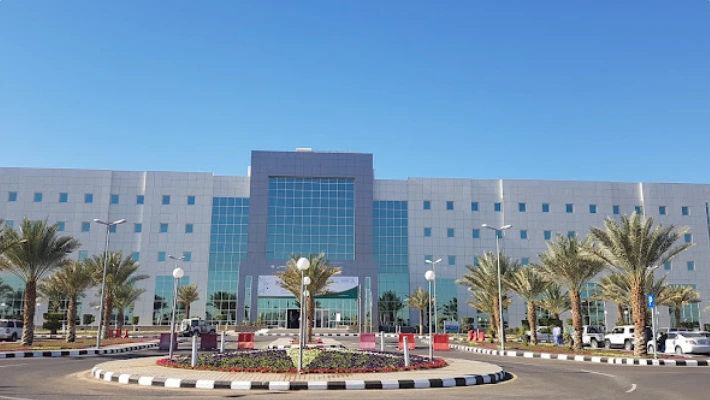
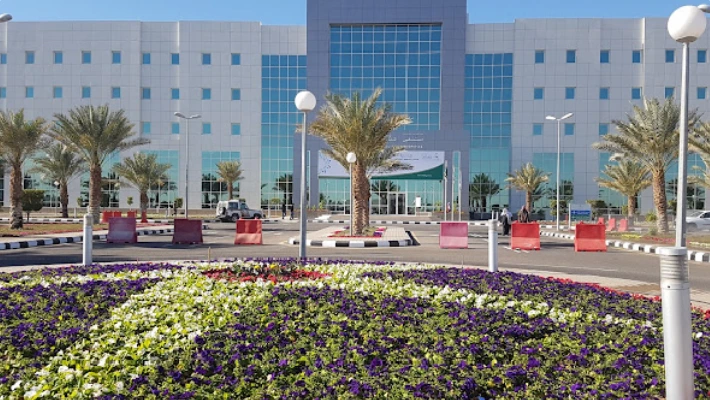
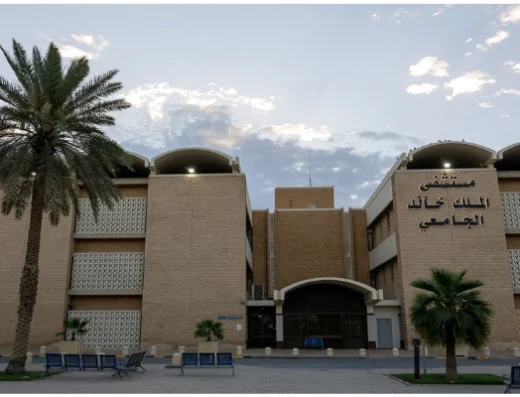
King Fahad Specialist Hospital Dammam (KFSHD) is a tertiary referral hospital located in Dammam, Eastern Region of Saudi Arabia. The hospital sits in the Al Murekbat area on Omar Bin Thabet Street.
Construction began in 1984 and was completed in 1999. The hospital was originally named “Gulf Hospital” before being renamed by Royal Decree. King Abdullah Bin Abdul-Aziz officially inaugurated it on 17 September 2005.
Clearly, this is not a new facility. It carries decades of clinical history and a strong track record in specialized medical care across the Kingdom.
What Makes This Hospital Different
King Fahad Specialist Hospital Dammam is one of the leading healthcare facilities under the Eastern Health Cluster. As a tertiary referral center, the hospital provides highly specialized medical and surgical care.
The hospital is the first Ministry of Health (MOH) hospital in Saudi Arabia to receive the American Academy of Continuing Medical Education (AACME) accreditation.
Moreover, KFSHD is the only MOH hospital in Saudi Arabia that provides stem cell transplant services. Between 2010 and 2015, the center performed 181 transplants.
These achievements set it apart not just regionally, but at the national level.
Accreditations and Quality Standards
The hospital holds multiple internationally recognized accreditations:
- JCI: Joint Commission International.
- CAP: College of American Pathologists.
- CBAHI: Central Board for Accreditation of Healthcare Institutions.
- IAEA: International Atomic Energy Agency.
- ASHI: American Society for Histocompatibility and Immunogenetics.
- AACME: American Academy of Continuing Medical Education.
Clearly, these standards reflect the hospital’s commitment to safe, high-quality patient care.
Core Medical Specialties
Since 2008, the hospital has operated as a full tertiary referral center, offering specialized care across oncology, organ transplant, neurosciences, cardiac services, and genetic sciences.
Oncology Center:
The Oncology Center is one of KFSHD’s core competencies. It covers adult and pediatric medical oncology, hematology, stem cell transplant, palliative care, radiation therapy, and oncology surgery.
Advanced techniques include chemotherapy, total body irradiation, bone marrow transplant, autologous and allogenic target cell therapy, immunotherapy, and intraoperative radiation therapy (IORT).
Multi-Organ Transplant Center (MOTC):
The Multi-Organ Transplant Center was established in 2008 to serve the Eastern Province and the wider Kingdom. It started with kidney transplants in September 2008 and has continued to expand.
Services include adult and pediatric hepatology, pre- and post-renal transplant care, liver transplant care, ABO-incompatible transplantation, and an organ donor mobile team.
Notably, KFSHD is the only MOH hospital in Saudi Arabia with a pancreas transplant program.
Neurosciences Center:
The Neurosciences Center covers neurosurgery, spine surgery, neurology, pediatric neurology, mental health, physical medicine, rehabilitation, and clinical neurophysiology.
In addition, the center provides care for epilepsy, multiple sclerosis, neuromuscular disorders, movement disorders, sleep medicine, and neurorehabilitation for amputees.
Additional Departments and Services
Beyond its flagship centers, the hospital offers a wide range of clinical departments:
- Emergency Medicine (24/7 availability)
- Hematology and Nuclear Medicine
- Orthopedic Surgery and Urology
- Obstetrics and Gynecology
- Pediatrics and Family Medicine
- Pathology and Laboratory Medicine, including Molecular Diagnostics and Cytogenetics
- Home Health Care and Social Services
- Medical Imaging, Anesthesia, and Critical Care
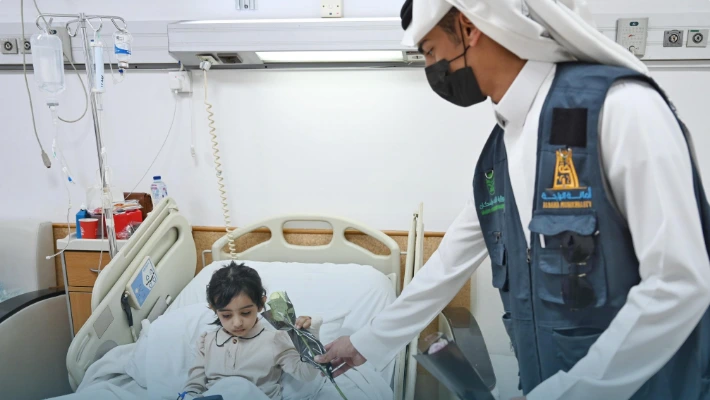
Most importantly, these services work together under one roof, making complex care accessible for patients across the Eastern Region.
Outpatient and Inpatient Access
Outpatient clinics are open Sunday to Thursday, from 8:00 AM to 4:00 PM. Inpatient services run 24 hours a day, seven days a week, including weekends and official holidays.
Patients referred to specialized clinics can book appointments directly through reception staff at the clinic. The hospital’s central number provides access to all services. For Ministry of Health inquiries, patients can also contact the MOH call center at 937.
International and Academic Partnerships
KFSHD has developed collaborative agreements with leading hospitals and universities in North America and Europe. These partnerships include:
- Roswell Park Comprehensive Cancer Center.
- St. Jude Children’s Research Hospital.
- University of California, San Diego.
- The Children’s Hospital of Philadelphia.
- McGill University Health Center.
- University Health Network.
On the national level, the hospital works with King Fahd University of Petroleum and Minerals, King Saud University, and Dammam University, among others.
Furthermore, KFSHD is recognized by the Saudi Council for Health Specialties as a center for specialized training, and it trains medical scholars from neighboring Arab countries to earn Saudi Board and Arab Board diplomas.
Research and Innovation
The research administration was established in January 2010. The Institutional Review Board (IRB) reviews and approves clinical research proposals, with plans to expand into basic research.
This positions the hospital not just as a treatment center but as an active contributor to medical science in the region.


Leave a Reply