Overview
About
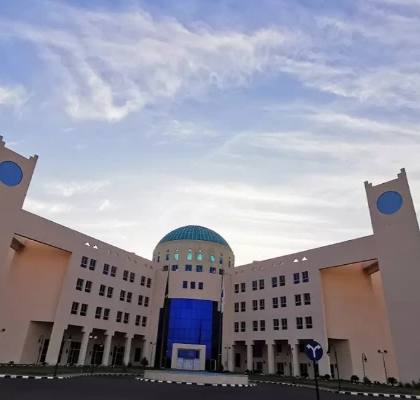
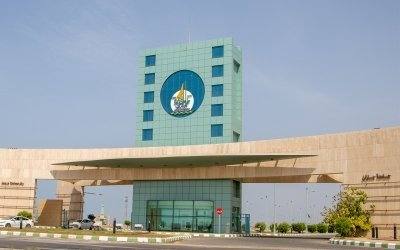
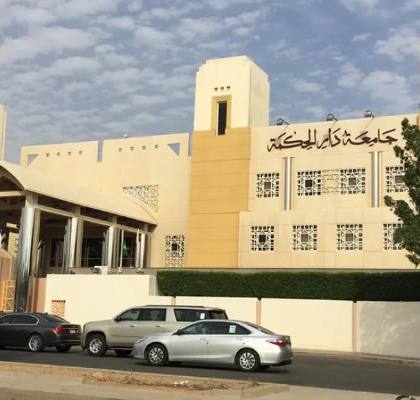
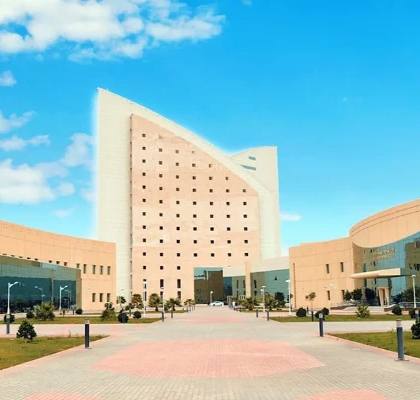
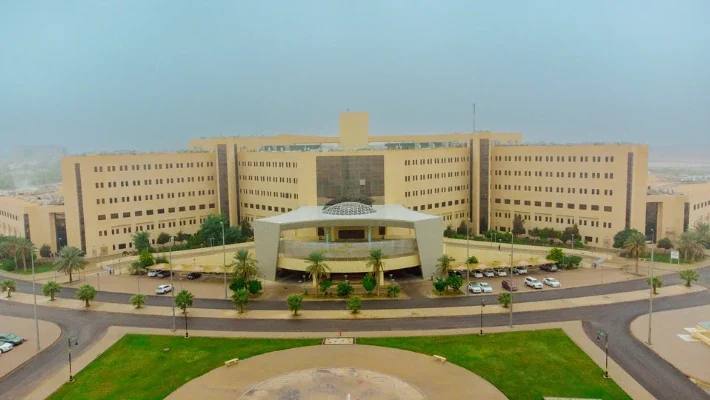
Qassim University (QU) is a leading Saudi public university. It sits in the heart of Buraydah, in the Qassim Region of Saudi Arabia. The university operates under the supervision of the Saudi Ministry of Education.
The campus spans an im
Features
Amenities
- university
- educational institution
- point of interest
- establishment
Schedule
Opening hours
monClosed
tueClosed
wedClosed
thuClosed
friClosed
satClosed
sunClosed
3 photos
Photo gallery
Watch
Video tour
Find us
Location
Buraydah 52571, Saudi Arabia
What guests say
Reviews (0)
No reviews yet — be the first to share your experience.
About this place — in detail
Qassim University (QU) is a leading Saudi public university. It sits in the heart of Buraydah, in the Qassim Region of Saudi Arabia. The university operates under the supervision of the Saudi Ministry of Education.
The campus spans an impressive 7.8 million square meters. This makes it one of the largest university campuses in the Kingdom. The university serves both local and international students across a wide range of disciplines.
Clearly, Qassim University is not just an institution. It is a national landmark for higher education, research, and community development.
History and Background
The university carries an academic legacy of over four decades. Some of its colleges welcomed students as early as 1401 AH (1981 CE).
In the academic year 1423/1424 AH (2003/2004 CE), the Royal Decree No. 22042/B/7 officially established Qassim University. It began with seven colleges. These colleges came from branches of Imam Muhammad ibn Saud Islamic University and King Saud University in the Qassim Region.
Over the years, QU expanded steadily. It absorbed colleges of education for both men and women. It also integrated four health colleges previously under the Ministry of Health. Today, the university has grown to 17 colleges. It also has branches across various provinces of the Qassim Region.
Vision, Mission, and Core Values
Vision: National leadership in education, research, and sustainability, with active national and global partnerships.
Mission: To provide educational, professional, research, and consulting services that drive national development. QU fosters innovation, equal opportunity, and a culture of teamwork.
The university's core values guide everything it does:
Belonging: Building national loyalty and a spirit of giving
Justice: Equal opportunities for every student and faculty member
Trustworthiness: Acting with sincerity and professional ethics
Transparency: Supporting accountability and integrity in all operations
Mastery: Applying the highest quality standards across all services
Innovation: Encouraging creative thinking and valuable new ideas
Teamwork: Embedding a collaborative culture in thought and action
Academic Programs and Colleges
Qassim University offers 261 academic programs across 17 colleges. The programs cover a broad spectrum of fields. Students can pursue bachelor's, master's, diploma, and doctoral degrees.
Moreover, the university welcomes international students and offers dedicated admission pathways for them.
Colleges at Qassim University
Health Sciences Colleges
College of Medicine
College of Dentistry
College of Pharmacy
College of Applied Medical Sciences
College of Nursing
Engineering Colleges
College of Engineering
College of Architecture and Planning
Science Colleges
College of Computer Science
College of Sciences
College of Agriculture and Food Sciences
College of Veterinary Medicine
Humanities and Social Sciences
College of Sharia and Islamic Studies
College of Languages and Humanities
College of Arts and Design
College of Education
Administrative Sciences
College of Business and Economics
Applied Programs
Applied College (offering diploma programs and distance learning options)
Research and Innovation
Research is a pillar of Qassim University's identity. The university has published 24,726 research papers. This output places it among the most productive research institutions in the Arab world.
Furthermore, the university hosts several research chairs, specialized research centers, and scientific journals. It also supports scientific societies and runs active research libraries for students and faculty.
Most importantly, in 2026, Qassim University won a gold medal and three silver medals at the prestigious Geneva International Inventions Exhibition. This is a strong testament to the university's global research standing.
The university also signed a memorandum of understanding with the Qassim Science Center. This reflects its commitment to community-centered innovation.
Accreditations and Rankings
Qassim University holds both local and international accreditations. These credentials confirm the quality and credibility of its academic programs.
National Accreditation
Full, unconditional institutional accreditation from the National Center for Academic Assessment and Accreditation (NCAAA) for 2013–2020 and 2023–2027
International Accreditations
ABET (Engineering and Technology programs)
AACSB (Business programs)
ACPE (Pharmacy programs)
IBCT: International Federation for Training Accreditation
ACTD: American Center for Training and Development
91 total programmatic accreditations from 6 prestigious international bodies
Global Rankings
Five-star rating by QS Stars — the highest category
Ranked in the Times Higher Education World and Arab University Rankings
Listed in the Shanghai Academic Ranking of World Universities
Included in the UI GreenMetric World University Ranking (sustainability)
Ranked 1,361 globally in the Webometrics Ranking
Member of CHEA (Council for Higher Education Accreditation), USA
Member of the IREG Observatory on Academic Ranking and Excellence
Clearly, QU's ranking profile reflects a truly world-class institution.
Campus Facilities and Student Life
Qassim University offers a rich and vibrant campus experience. The modern campus includes:
Medical City: A full-service university medical facility
University Veterinary Hospital: Serving both academic and community needs
King Abdulaziz Convention Center: Hosting national and international conferences
Olympic Complex: Supporting sports, fitness, and athletic programs
Student Housing: Comfortable accommodation for students
Student Clubs: Diverse clubs serving students from over 90 nationalities
Health Services: On-campus medical support for all students
Driving School: A practical training facility within the university
Additionally, the university runs an Institute for Studies and Consulting Services. This institute connects academic expertise with real-world business and community needs.
International Community
Qassim University hosts over 3,000 international students from more than 90 countries. In 2026, the university hosted the fifth "Peoples' Heritage" Festival. The event attracted more than 110,000 visitors. It celebrated cultural diversity among the student body.
This diversity makes QU one of the most culturally rich universities in the region.
Partnerships and Community Engagement
The university has signed 56 partnership and cooperation agreements between 2016 and 2024. These agreements involve ministries, government bodies, scientific associations, and private sector companies.
In addition, QU signed a memorandum of understanding with the Balsam Society. This MOU aims to support cancer patients through the university's Medical City. Such partnerships show QU's deep commitment to community welfare.
Digital Services and Online Access
Qassim University provides a fully integrated digital ecosystem for students and staff:
MyQU Portal: A unified single sign-on platform for all university services
LMS (E-Learning System): Full online learning support
University Email: Accessible via Outlook
Injaz (Achievement System): Document management and digital workflows
Visitor Portal: For external users to access selected services
Mobile App: Available on both iOS (App Store) and Android (Google Play)
Admission Options
Qassim University accepts students through several pathways:
Bachelor's Admission: Open to Saudi and international applicants
Graduate Admission: Master's and doctoral programs
Diploma Admission: Through the Applied College
International Student Admission: Dedicated support for non-Saudi students
You might also like
Related listings
Swipe left